Seachem Flourish vs. NilocG Thrive: The Power Comparison
If you have high light and CO2, your plants are essentially in "overdrive." They are hungrier than a typical aquarium plant. In this professional environment, the choice of fertilizer becomes critical. Seachem Flourish and NilocG Thrive represent two different eras of plant care.
While Flourish is a conservative trace-element supplement, Thrive is part of a new generation of "rich" all-in-one fertilizers designed to keep up with the demands of hungry scapes.
| Feature | Seachem Flourish | NilocG Thrive |
|---|---|---|
| Philosophy | Trace Element Supplement | Rich All-in-One |
| Nitrogen Ratio | Near Zero (0.07%) | Very High (2.6%) |
| Dose Interval | 1-2 times weekly | 1-3 times weekly |
| Copper Content | Extremely Low (Shrimp Safe) | Measured (Safe at recommended dose) |
1. The "Hungry Tank" Problem
In a standard low-tech tank, fish food provides about 90% of the macros (N-P-K) plants need. Seachem Flourish is perfect for this, as it fills the 10% gap of iron, manganese, and boron.
But when you add high-intensity lighting and pressurized CO2, the plants begin to grow 5x to 10x faster. They will consume all the Nitrogen in the fish waste in hours. This is why Thrive was created. It contains a much higher N-P-K ratio (2.6-1.1-9.3) to ensure your plants never go hungry during the peak of the day.
2. Measuring precision vs. Pumps
Seachem Flourish uses a cap that allows for very fine measurement in gallons or liters. Thrive uses a high-quality pump where 1 pump equals 2ml. While the pump is wonderfully convenient, it can make it difficult for scapers with tiny, 2.5-gallon nano-tanks who might only need 0.5ml. For larger tanks, the pump is the undisputed king of convenience.
3. The Shrimp Safety Question
Seachem Flourish is famous for its extremely low copper level, making it the most "accident-proof" fertilizer for sensitive crystal shrimp. While NilocG specifically formulated ThriveS (a shrimp-safe version), the standard Thrive is still safe for most hardy shrimp when dosed correctly. However, if you are a high-end shrimp breeder, Flourish’s conservative formula offers a higher margin for error.
4. The Algae Risk Factor
NilocG Thrive is an incredibly powerful "gasoline" for your tank. If your plants are growing rapidly under high light and CO2, they will consume Thrive as fast as you add it. However, if those plants stall or if your CO2 runs out, the excess nutrients in Thrive can trigger a massive algae bloom almost overnight. Seachem Flourish is far more "stable" in this regard; because it lacks Nitrogen and Phosphorus, it rarely fuels algae explosions even if you miss a dose or have a slight imbalance.
5. Livestock & Shrimp Safety
For the professional shrimp breeder, Seachem Flourish is the safest choice due to its nearly non-existent copper levels. Thrive contains a measured amount of copper to support plant health. While safe for most community tank shrimp (like Amano or Ghost shrimp), breeders of high-end Crystal Red or Caridina shrimp often prefer ThriveS (the copper-free version) or sticking with the conservative Flourish formula to minimize any risk of heavy metal accumulation.
6. Identifying Deficiencies
- Green Spot Algae on Glass: This often signals a low Phosphate situation. Thrive provides the phosphate fix, while Flourish does not.
- Slow Growth & Small Leaves: This is general starvation. Thrive provides the full N-P-K "meal" to get growth back on track.
- Twisted or Curled New Growth: This can be a sign of Calcium or Boron issues. Seachem Flourish specializes in these micro-trace corrections without adding excess macros.
Summary: The Verdict
Choose Seachem Flourish if: You have a low-light tank with many fish, you are on a budget, or you are keeping very sensitive, high-end shrimp.
Choose NilocG Thrive if: You have a high-tech tank with CO2, you have many fast-growing stem plants, or you want the absolute highest growth rate possible from a single bottle.
Calculate Your Growth Dose
Ready to hit the gas pedal? Or keeping it steady with micros? Use our calculator to find the exact dose for your net water volume to prevent waste and algae.
Start Precision Dosing Now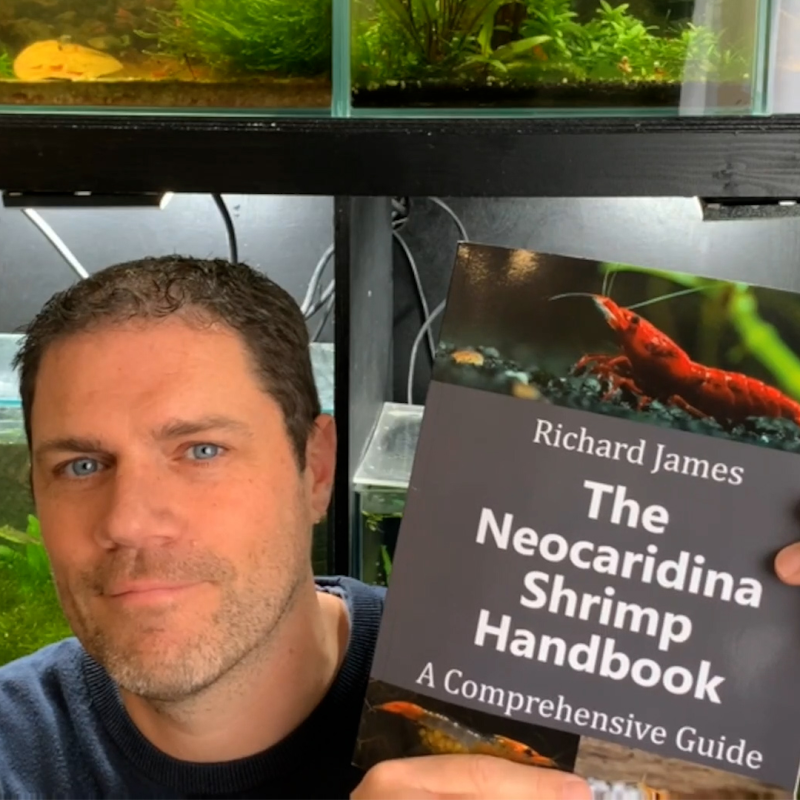
Written by Richard James
Aquarist, author, and creator of ShrimpKeeper.co.uk. Helping hobbyists achieve professional results through precision dosing.
View My YouTube Channel & Books →