
eSHa gdex vs. eSHa ndx: Choose the right parasite fighter
Parasites are the dark cloud of the aquarium world. Everything seems fine until you notice a Discus that’s getting thinner despite eating like a shark, or a Corydoras frantically scratching its sides against the sand. You know it’s a parasite, but when you look at the eSHa range, you see two specialized bottles: eSHa gdex and eSHa ndx.
If you treat flukes with ndx, or nematodes with gdex, you’re just pouring money (and chemicals) into the water for no reason. Here is my "field guide" to telling these two apart before you start the treatment.
eSHa gdex
The "External" Fighter
Targets Flukes, Skin worms, and Flatworms.
- Gasping at the surface
- "Flicking" or scratching against wood
- One gill clamped shut
- Cloudy patches on the skin
eSHa ndx
The "Internal" Fighter
Targets Nematodes, Camallanus, and Roundworms.
- Wasting away (hollow belly)
- Eating well but losing weight
- Red "threads" from the vent
- Stringy white poop
When to reach for eSHa gdex
I think of gdex as the "Praziquantel" of the European hobby. It’s incredibly safe. I’ve used it in heavily planted shrimp tanks without a single death. If you see your fish gasping or looking like their skin is irritated, it’s usually flukes. Flukes are essentially tiny flatworms that hook into the gills or skin. gdex dissolves their "armor" and lets the fish's own immune system take over. It’s very gentle and doesn't require a massive water change immediately after.
When eSHa ndx is a must
ndx is the "Big Guns." It uses Levamisole, which is a powerful internal parasite killer. If you see tiny red threads hanging from a Guppy or Cichlid's anus, you have Camallanus worms. This is an emergency. The ndx paralyzes the worms so the fish can "pass" them.
Crucial Tip: Because ndx paralyzes the worms but doesn't always kill them instantly, you must do a massive gravel vacuum 24 hours after dosing. You need to suck those paralyzed worms out of the substrate before they wake up and crawl back into your fish! Also, be aware that ndx is not safe for most snails like Nerites or Mysteries—move them out before you dose.
The Summary: Which one do I buy?
If the problem looks skin-deep (flicking, gasping), buy eSHa gdex. If the problem is deep-down (wasting away, red threads, stringy poop), buy eSHa ndx.
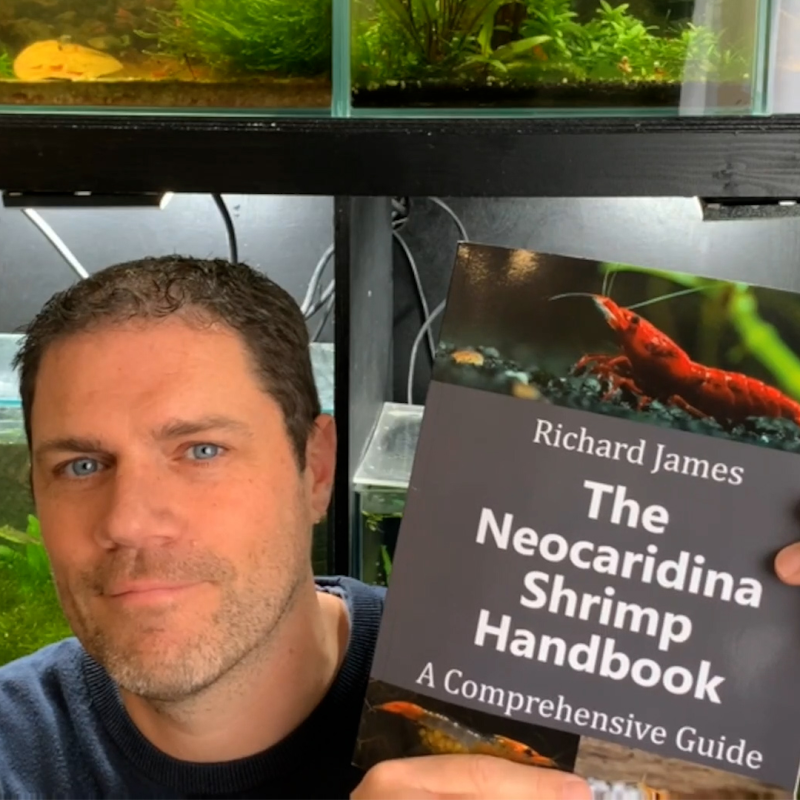
Written by Richard James
Aquarist, author, and creator of ShrimpKeeper.co.uk. Helping hobbyists achieve professional results through precision dosing.
View My YouTube Channel & Books →While eSHa gdex is generally considered safe for shrimp and snails at standard dosages, eSHa ndx is NOT safe for most snails (particularly Nerite and Mystery snails). If you have prized invertebrates, it is best to treat fish in a separate quarantine/hospital tank.
The Summary: Which one do I buy?
If your fish is gasping, flicking, or has localized skin patches, get eSHa gdex. If your fish is thinning out despite eating, or if you see worms coming from the anus, get eSHa ndx.
If you're unsure, many experts suggest starting with gdex as it is the "gentler" of the two treatments and addresses more externally visible symptoms.
Calculate Your Parasite Treatment
Use our calculators to get the exact dose for gdex or ndx based on your aquarium volume.